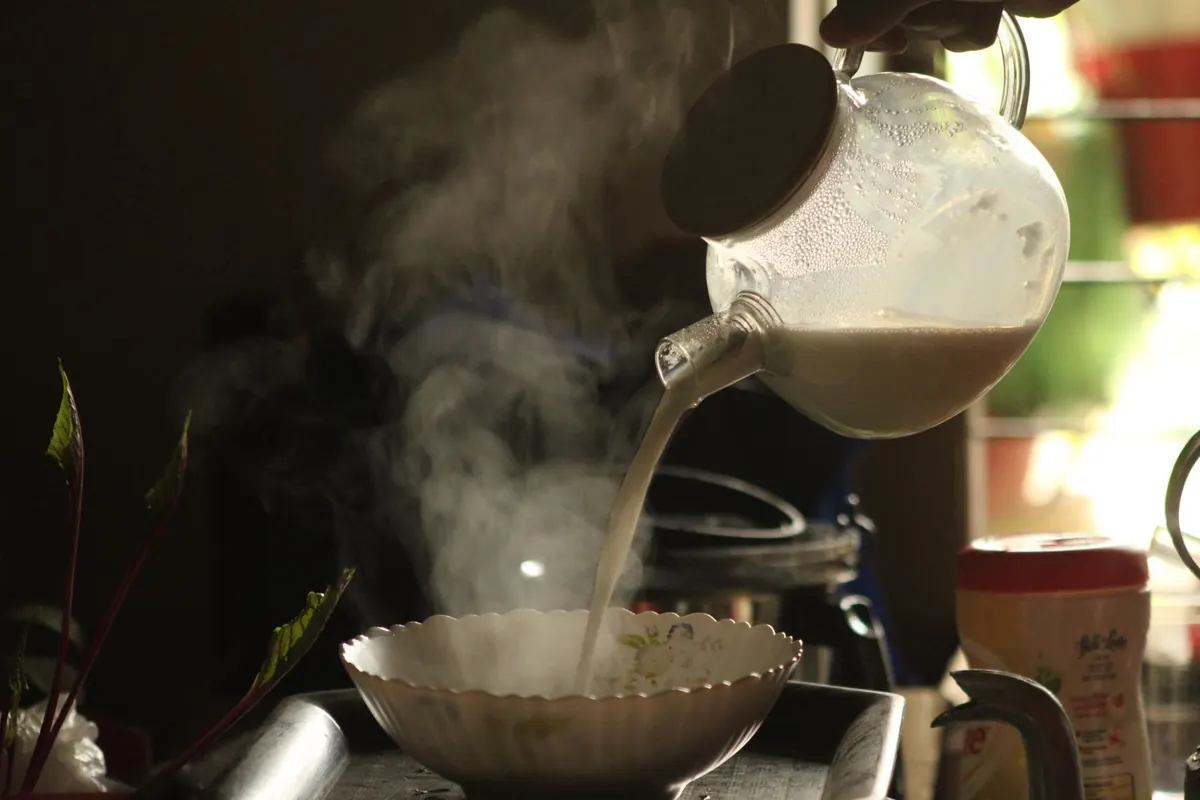
Classic British Steamed Sponge Pudding: A Winter Comfort Dessert
There are desserts you bake and desserts you steam, and the second kind belongs to winter. A classic British steamed sponge pudding comes out of the basin pale, tender, and almost custardy at the edges, with a pool of golden syrup or jam waiting underneath. It is not fashionable. It is not quick. It is exactly what you want when the windows are dark and the kettle is on.
What Makes a Steamed Sponge Pudding Different
Steaming does not brown the crust or dry the crumb. It surrounds the batter with gentle, even heat, so the sponge stays soft and damp. The texture is closer to a light steamed cake than an oven-baked Victoria sponge. Butter or suet gives richness; self-raising flour and a little baking powder give lift. The pudding is turned out upside down, so the syrup or jam that lined the basin becomes a glossy sauce on top. In Britain, this family of puddings has many names and regional accents.
The Regional Angle: Clootie, Pond, Roly-Poly
In Scotland, a clootie dumpling is a suet sponge with dried fruit and spice, steamed in a floured cloth—the cloot—and often served with custard. In Sussex, the pond pudding hides a whole lemon and plenty of butter inside a suet crust; when cut, the lemon juices and butter make a pond. Jam roly-poly is a rolled suet sponge with jam, steamed and sliced, sometimes known in parts of England as dead man’s arm. Spotted dick is a steamed suet pudding dotted with currants. Treacle sponge is the closest cousin to the recipe below. These are not identical, but they share the same logic: a simple batter, a long steam, and a sauce poured over at the table.
Choosing and Preparing Your Basin
A 1-litre (about 1-quart) pudding basin serves four to six. Ceramic holds heat well and feels traditional; plastic is lighter and cheaper; metal conducts heat quickly, so check sooner. Whatever you use, leave 2–3 cm (about an inch) of headroom for rise.
Covering the basin
Grease the basin generously with butter, right into the corners. If you are using golden syrup, jam, or treacle, spoon it into the bottom before the batter. To cover, cut a piece of baking parchment slightly larger than the basin. Fold a pleat in the middle so the pudding can rise. Place it over the basin, then add a layer of foil. Tie string around the rim, and make a string handle across the top so you can lift the hot basin out. A basin with its own lid works too, but still add parchment if the lid is loose.
Setting Up the Steamer Without Special Gear
You do not need a dedicated pudding steamer. A deep stockpot with a lid and a trivet is enough. An upturned heatproof saucer, a metal cookie cutter, or a folded foil ring can take the place of a trivet. Set the covered basin on the trivet. Pour boiling water into the pot until it comes halfway up the sides of the basin. Put the lid on the pot and bring the water to a simmer. Keep it at a steady simmer, not a rolling boil. Check every 30 minutes and top up with boiling water so the pot does not run dry. The basin should never sit directly on the base of the pot.
Slow cooker and pressure cooker notes
A slow cooker works well: put the basin in the insert, add boiling water halfway up, cover, and cook on high for 3–4 hours or on low for 6–8 hours, until a skewer inserted into the centre comes out clean. A pressure cooker is faster but less forgiving: use a trivet, add water to come halfway up the basin, and cook at high pressure for about 30–40 minutes for a 1-litre pudding. Let the pressure release naturally, then check. The crumb will be a little firmer than a stovetop steam, but it is a useful shortcut when you want the flavour without the long afternoon.
The Batter: Simple Ratios, Big Rewards
Most steamed sponge puddings follow a forgiving formula. For a 1-litre basin, cream 100 g soft butter with 100 g caster sugar until pale, then beat in 2 large eggs one at a time. Fold in 150 g self-raising flour and a pinch of salt. Add a splash of milk if the batter is stiff; it should fall from the spoon slowly, not plop. A suet version is even simpler: mix 100 g shredded suet, 100 g caster sugar, 200 g self-raising flour, and a pinch of salt with 1 egg and enough milk to make a soft dropping consistency. Suet gives a slightly denser, more old-fashioned crumb that many people consider the true taste of a steamed pudding.
Flavour comes from what you put in the basin and what you add to the batter. Golden syrup is the classic lining, but raspberry jam, marmalade, lemon curd, or black treacle all work. For a fruitier pudding, fold 100 g currants, raisins, or chopped dates into the batter with a teaspoon of mixed spice. For a chocolate version, replace 25 g of the flour with cocoa and add a handful of chocolate chips. Just remember that wet additions make the sponge heavier, so keep them modest.
Steamed puddings are more forgiving than baked cakes, but they are not instant. The long, gentle heat is what turns a plain batter into something silky and comforting.
Serving, Storing, and Reheating
Turn the pudding out onto a warm plate and let it sit for a minute before lifting the basin away. The syrup or jam will run down the sides and pool around the base. Serve with hot custard, pouring cream, clotted cream, or vanilla ice cream. A jug of cold cream is traditional in some households; others insist on custard thick enough to stand a spoon in. If you want a sauce, warm extra golden syrup with a squeeze of lemon and a knob of butter, then pour it over at the table.
Leftovers keep well. Cool the pudding completely, wrap it tightly, and store it in the fridge for up to three days. To reheat, put it back in a greased basin, cover with parchment and foil, and steam for 30–40 minutes, or microwave individual slices for 30–60 seconds until hot. You can also freeze a whole steamed pudding for up to three months: wrap it well, freeze it, then reheat from frozen in a covered basin over simmering water for about 1 hour. This makes it a practical make-ahead dessert for Christmas or a cold weekend.
Troubleshooting: Dense, Soggy, or Stuck
If your pudding is dense, you probably overmixed the batter or used old baking powder. Fold the flour in gently and check the date on your raising agents. If it is soggy in the middle, it needed longer: every basin, pot, and stove behaves differently, so trust the skewer rather than the clock. A waterlogged top usually means the cover was not tight enough, or the water level was too high and splashed over the rim. Next time, tie the parchment and foil more securely and keep the water at a steady simmer, not a furious boil.
If the pudding sticks, you did not grease the basin well enough, or you turned it out too soon. Run a thin knife around the edge, wait five minutes, then invert again. A basin lined with a disc of parchment at the bottom is almost foolproof. And if the top looks pale and wrinkled, that is normal: the underside becomes the top when you turn it out, and the wrinkly side is hidden in the sauce.
None of this is difficult, but it does ask for patience. That is part of the pleasure. A steamed sponge pudding is a slow, old-fashioned kind of comfort, the sort of dessert that fills the kitchen with steam and makes a dark afternoon feel generous. Serve it in thick wedges, with plenty of sauce, and let the winter do what it likes outside.
Photo: Pexels / Pixabay

You Might Also Like
Doubling a custard recipe takes more than multiplication. Learn which ratios to scale, how pan depth drives bake time, and how to chill safely for a crowd.
How oat, soy, almond, and coconut milks behave in dairy-free pudding, plus the starches, agar, and gums that deliver either a soft spoonable set or a firm sliceable one.