How to Scale Pudding and Custard Recipes for a Crowd
You agreed to bring dessert for thirty people, and your favorite crème brûlée recipe makes six ramekins. Doubling the numbers feels like arithmetic homework, so you multiply everything by five, pour it into the biggest dish you own, and slide it into the oven. Two hours later the edges are rubbery, the middle is soup, and you are Googling "custard fix" at 11 p.m. Custard is not cake. It sets by coagulation, not structure, which means the math is only the beginning.
Weigh Your Base, Then Multiply
Custard recipes live on ratios, and ratios survive scaling beautifully — as long as you measure by weight. A large egg weighs about 50 grams out of the shell, with roughly 18 to 20 grams of yolk and 30 grams of white. Once you switch to grams, a batch with twenty yolks stops being a guessing game, because the difference between a 17-gram and 22-gram yolk gets multiplied twenty times.
The core ratios are worth memorizing:
- Baked custard: 1 whole egg per 240 ml (1 cup) of dairy, plus an extra yolk per 2 cups for richness.
- Crème brûlée: 1 yolk per 60 ml (1/4 cup) of cream, plus one or two extra yolks per batch for a firmer set.
- Pastry cream: about 3 tablespoons cornstarch per 480 ml (2 cups) of milk, with 3 to 4 yolks.
- Panna cotta: 1 teaspoon powdered gelatin per 240 ml of liquid, bloomed in cold water first.
Scale dairy, eggs, sugar, and starch proportionally. Cream and milk are not interchangeable at scale: more fat means a softer, richer set, and all-milk custards turn watery and firm. If you swap, expect a different dessert, not just a bigger one.
What Scales Linearly and What Doesn't
Multiply the expensive ingredients with confidence. Be more careful with the small, potent ones.
- Scale 1:1: dairy, eggs, sugar, butter, chocolate, flour, cornstarch.
- Scale at about 75%: salt, vanilla and other extracts, and assertive spices like nutmeg, cardamom, cloves, and cinnamon.
- Scale by liquid volume, then taste: gelatin and agar. Large batches set slightly firmer, so stay near the low end of the range rather than the high end.
- Don't scale at all: oven temperature, pan depth, and your doneness cues.
Sugar deserves a note. It raises the temperature at which eggs coagulate, so a custard with too little sugar sets firmer and leaks water. Cut sugar lightly if you must, never aggressively.
Choose the Pan by Depth, Not Volume
Heat travels through custard from the outside in, so depth — not total volume — decides how long it bakes. If your original ramekins hold custard one inch deep, your scaled version should sit about one inch deep too. The easiest way to honor that is simply to use more ramekins or more pans.
When you do need a single vessel, compare surface area. An 8-inch round pan gives you about 50 square inches of floor; a 9-inch round gives 64; a 9x13 gives 117; an 8x8 gives 64. So two 9-inch rounds hold roughly the same volume as one 9x13 at the same depth, and a recipe written for six 4-ounce ramekins fits a 9-inch round pan at about three-quarters of an inch — shallow enough to bake quickly and chill fast.
Always bake in a water bath. Set the pan inside a larger roasting pan and pour hot water in until it reaches halfway up the sides. This buffers the heat and keeps the edges from setting before the center.
Adjusting Bake and Chill Times
Keep the depth the same and the time stays close to the original, even if the pan is four times wider. Increase the depth and time grows faster than you'd expect — roughly with the square of the depth. A custard twice as deep takes closer to four times as long at the same temperature, not twice.
For big batches, drop the oven to 300°F (150°C) and add time rather than heat. Check early and often with an instant-read thermometer: baked custards are done around 170°F to 175°F (77°C to 79°C) at the center, and stirred custards like crème anglaise closer to 175°F to 180°F. The center should wobble like firm gelatin when you nudge the pan. Loosely tent with foil if the top browns before the middle sets.
Chilling scales worse than baking. A deep dish of custard can take six hours or more to reach refrigerator-cold in the middle, so spread it into shallow containers, press plastic wrap directly onto the surface, and give it overnight when you can. Baked custards and panna cotta freeze poorly — they weep and turn grainy — so plan refrigerator space instead. Custards keep three to four days, well covered.
Scaling Stirred Custards
Crème anglaise, lemon curd, and pastry cream are more forgiving than baked custards because you can see and feel them thicken. But a big batch behaves differently on the stove. Use a wide, heavy pot rather than a deep narrow one; the extra surface area helps the mixture heat evenly and reduces scorching. Stir constantly with a spatula that reaches the corners, and keep the heat moderate. A large batch also holds heat longer, so pull it off the stove a moment before it looks fully done — carryover cooking will finish the job.
Portions and a Practical Prep Plan
Count on 4 to 6 ounces of custard per person for a plated dessert. A 9x13 pan of bread pudding or baked custard serves 12 to 16 generous squares. For thirty people, that means two 9x13 pans or three dozen ramekins, with a little spare for the person who comes back twice.
- Two days out: weigh and scale the base, write the new quantities on the recipe card, and check that your pans and refrigerator shelves actually fit everything.
- One day out: make the custard base, chill it thoroughly, and bake any custards that need to set overnight.
- Morning of: bake or unmold, then chill again. Torch sugar toppings, add fresh fruit, or spoon on whipped cream only in the last hour.
- Serving: keep cold custards over a bowl of ice if they will sit out longer than two hours, and refrigerate leftovers promptly.
Scale the ingredients, respect the depth, and lean on your thermometer instead of the clock. The recipe that fed six will feed thirty without a single rubbery edge.
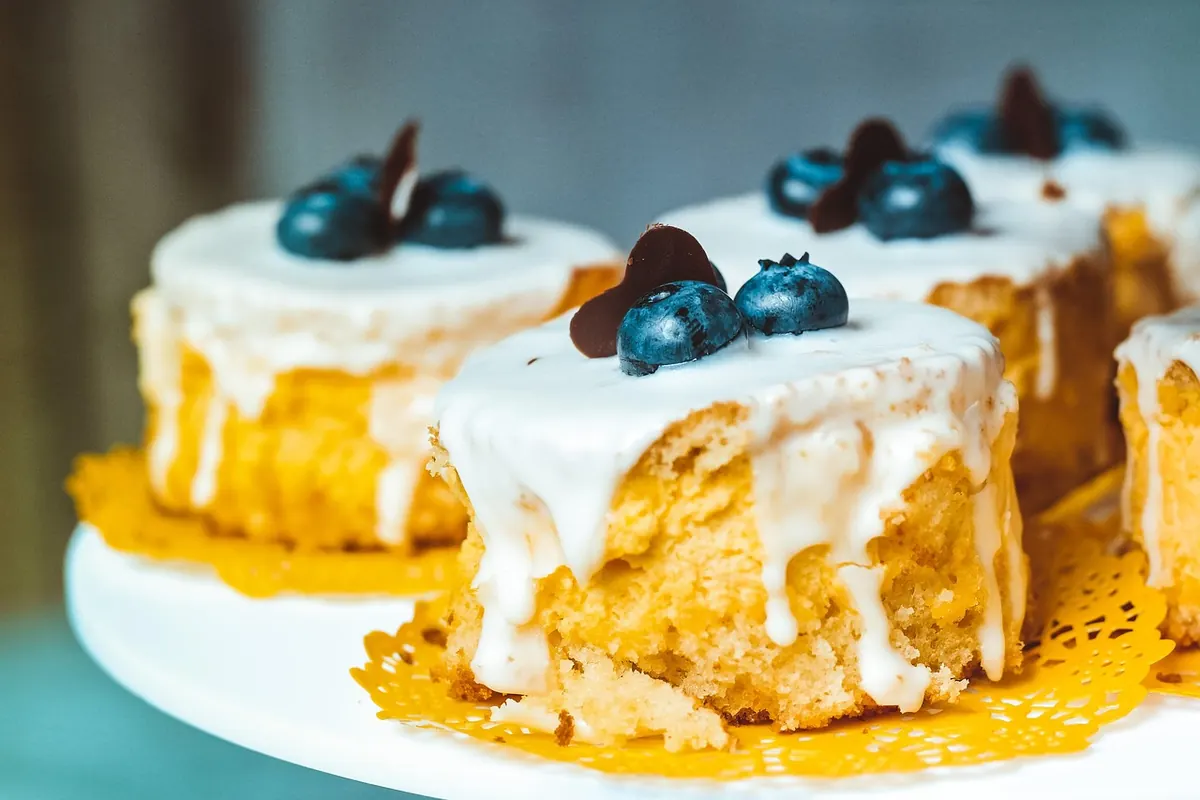
Photo: Eden FC / Pexels
You Might Also Like
How oat, soy, almond, and coconut milks behave in dairy-free pudding, plus the starches, agar, and gums that deliver either a soft spoonable set or a firm sliceable one.
Six no-bake pudding cups that set in the fridge, built from ripe summer fruit, cream and simple thickeners, with ratios, make-ahead timing and fixes for weepy or runny layers.