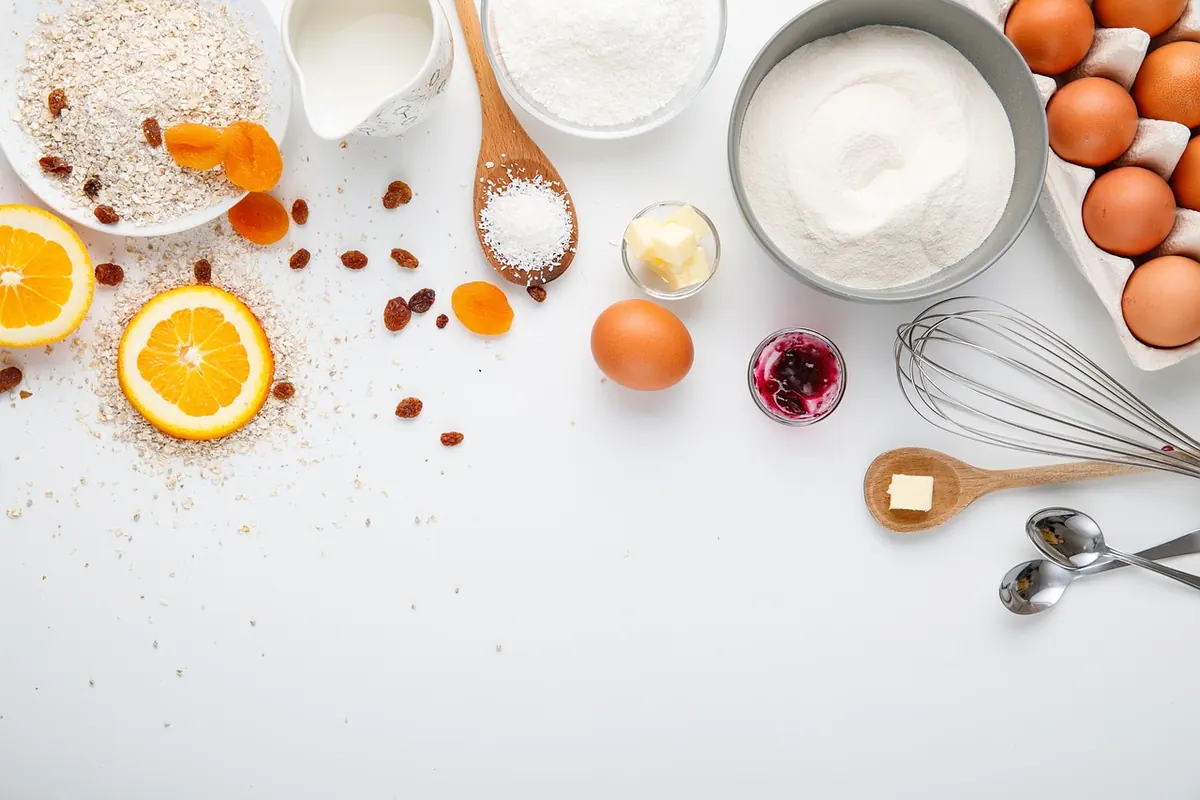
Why Pudding Turns Lumpy: The Science of Starch and Heat
You turn away from the saucepan for eight seconds. When you look back, the pale liquid that was going to be vanilla pudding has gone grainy at the edges, and small pale pebbles of starch are riding the surface like tiny icebergs. Same milk, same cornstarch, same recipe that worked last week.
Lumpy pudding is almost never the recipe's fault. It is a heat problem, and a predictable one.
Starch Is a Pile of Tiny Packets
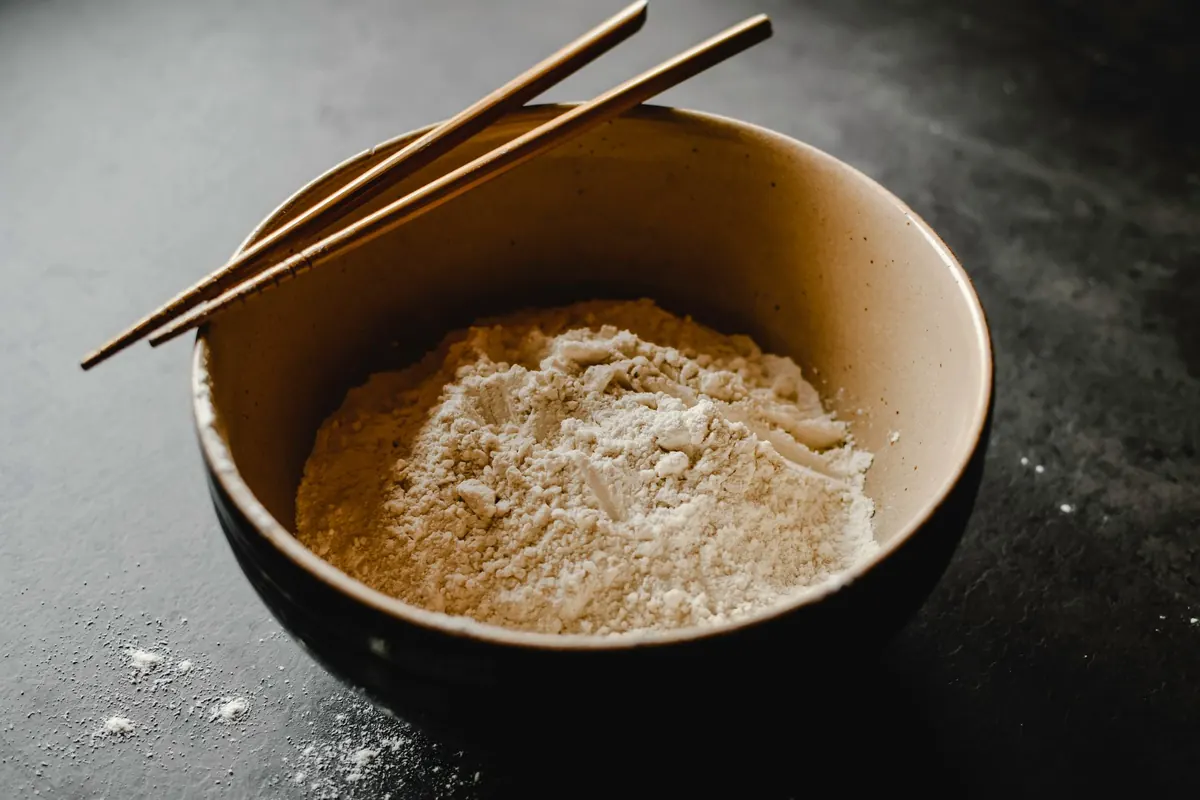
Cornstarch, flour, tapioca, arrowroot — all of them are powders made of starch granules. Each granule is a tight packet of long sugar chains folded back on itself, and in a dry jar the granules sit against each other and do nothing. Add cold milk and they scatter. You get a suspension: milky, a little chalky if you stop to taste it, but still liquid. Nothing thickens yet, because starch granules do not dissolve in cold water. They float.
What they need is heat and time — enough of both for water to push inside and stay there.
Gelatinization, in Plain Terms
Gelatinization is the moment starch granules take on water, swell, and lose their internal structure. As they swell, they crowd against one another and the liquid goes from thin to thick. Amylose, one of the two molecules packed inside starch, leaks out and builds a loose network that traps water. That network is your pudding.
Different starches come online at different temperatures:
- Cornstarch starts swelling near 62°C (144°F) and thickens fully in the low 70s Celsius, roughly 160-175°F. Glossy, neutral tasting, and it prefers a shorter cook.
- Wheat flour begins gelatinizing lower but needs longer simmering to lose its raw, pasty flavor — give it 5-10 minutes.
- Tapioca starch thickens at lower heat and sets stretchier and clearer, which is why it shows up in fruit pies.
- Arrowroot behaves similarly but is more delicate; it can thin out again if you boil it hard.
Two variables control all of it: temperature and time. Reaching the onset temperature starts the swelling. Holding there finishes it.
Why Sudden Heat Makes Clumps
Drop dry starch into hot liquid and the granules on the outside of each little cluster swell immediately, fuse together, and form a shell around the dry powder in the middle. That shell keeps water out and starch in. You now have a sealed pouch. You can whisk for ten minutes and the center will still be dry, because the pouch is protecting itself.
The same thing happens when you dump hot milk into a bowl of cornstarch in one pour, or when the bottom of the pan gets hot before the starch is evenly dispersed. The cure is dispersion before heat. Whisk the starch into a cold liquid first to make a slurry, or whisk it into sugar and then add cold liquid. Granules need to be separated and surrounded by cool water before the temperature climbs.
The tricky few degrees
Clumping happens fastest right at the onset range, roughly 60-70°C, when one spot in the pan races ahead of the rest. A heavy-bottomed pan and constant movement keep the mixture within a few degrees of itself, which is why the bottom of the pan is where lumps are born.
The Temperatures That Keep Custard Smooth
Custard adds eggs, and eggs fail earlier than starch. Yolks begin to coagulate near 65°C (150°F) and go from silky to scrambled by around 80°C. Starch wants to finish in the same neighborhood. That leaves a narrow, workable window: about 77-82°C, or 170-180°F.
Below that window, the starch hasn't finished and the custard stays thin and tastes raw. Above it, egg proteins tighten and squeeze out water, which is the grainy, curdled texture people blame on the starch. If you own a thermometer, use it — you have solved most of this problem before you start.
Without one, use the spoon test. Dip a spoon in, run a finger through the coating, and if the line holds, the custard is ready. Expect three to six minutes of steady whisking past the first wisps of steam. Never let it boil.
Sugar buys you a cushion
Whisk sugar into the yolks before any hot liquid touches them. Sugar raises the temperature at which egg proteins set, so you get a margin for error. Then temper: a splash of hot milk into the yolks while whisking, a second splash, then the rest in a slow, steady stream. Return everything to the pan and bring it back to 77-82°C.
Rescue Moves for Pudding That's Already Lumpy
- Strain it. Pour through a fine-mesh sieve into a clean pan, pressing the solids with a ladle or spatula. Reheat gently to serving temperature.
- Pulse, don't blend. A short burst with an immersion blender can smooth starch lumps, but prolonged blending shears the starch network and thins the pudding. Blend two seconds, check, repeat.
- Know when to quit. Grainy custard from curdled egg won't fully recover. Straining helps slightly; the flavor and body won't be what you planned.
- Don't dust in more starch. Raw cornstarch added at the end tastes chalky and usually makes fresh lumps. If the pudding is genuinely too thin, whisk a new cold slurry into a cup of hot pudding off the heat, then return it all to the pan and cook it back up to temperature.
A Short Checklist for Smooth Pudding
Cold liquid first, starch second, every time. Mix sugar with the starch or the yolks so the granules start out separated. Whisk in zigzags and figure-eights across the whole bottom of the pan rather than circles in the center, and scrape the corners where heat collects. Hold the custard at 77-82°C for the last few minutes of cooking, stirring constantly, because that is where smoothness is actually made. Finish off the heat with butter and vanilla.
Once it's smooth, cool it quickly. Pour the pudding into a shallow dish, press plastic wrap directly onto the surface to keep a skin from forming, and refrigerate. Reheat gently and whisk well — a starch gel stiffens in the cold and loosens again with a little warmth and movement. Then go back to that eight-second glance at the saucepan. With a thermometer in the pot, it won't cost you the batch.
Photo: sontung57 / Pixabay
You Might Also Like
Doubling a custard recipe takes more than multiplication. Learn which ratios to scale, how pan depth drives bake time, and how to chill safely for a crowd.
How oat, soy, almond, and coconut milks behave in dairy-free pudding, plus the starches, agar, and gums that deliver either a soft spoonable set or a firm sliceable one.